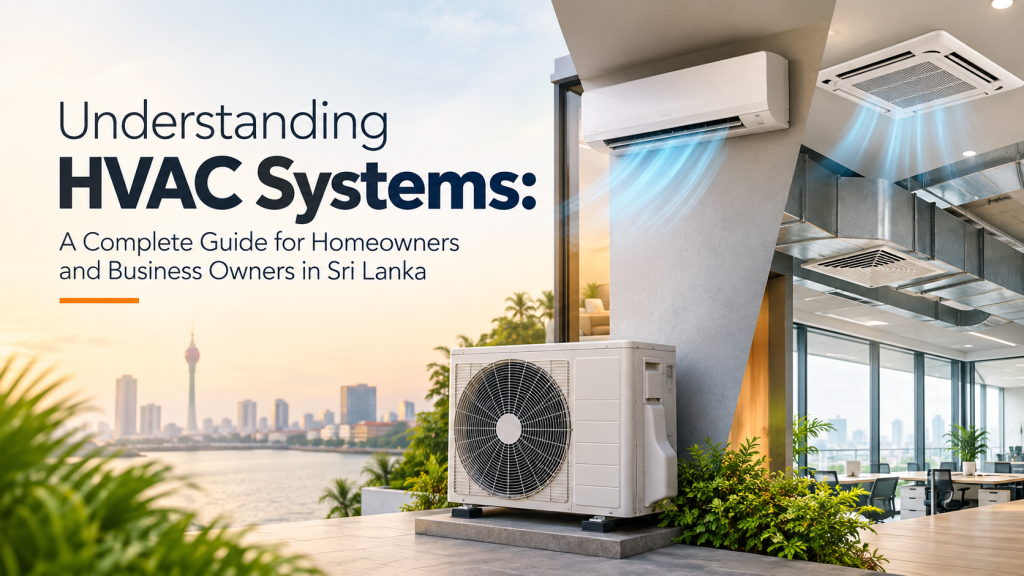
Introduction: What Is an HVAC System?
An HVAC system stands for Heating, Ventilation, and Air Conditioning. It is the equipment that controls temperature, humidity, and air quality inside a building. For homes and businesses in Sri Lanka, where the climate is warm and humid throughout most of the year, a properly functioning HVAC system plays a major role in daily comfort.
Indoor comfort is not only about temperature. Good air circulation and clean air also affect health, productivity, and overall wellbeing. Whether it is a family home, an office, a hotel, or a retail space, the right setup makes a noticeable difference to everyone inside the building.
Why a Reliable Heating, Ventilation, and Cooling Setup Matters
Sri Lanka experiences high humidity and consistent heat across most regions. This makes cooling and ventilation especially important compared to heating, which is used less often here. A reliable system keeps indoor spaces cool, reduces excess moisture, and helps prevent issues like mould growth and poor air quality.
For businesses, comfortable indoor conditions can directly affect customer experience and employee performance. Offices, restaurants, hospitals, and retail stores all depend on stable temperatures to function smoothly. For homeowners, a dependable setup means better sleep, healthier air, and lower stress during hot months.
A well designed HVAC system also supports energy efficiency. When heating, cooling, and ventilation work together properly, buildings use less power to maintain comfortable conditions, which can lead to noticeable savings over time.
Main Components of an HVAC System
An HVAC setup is made up of several parts that work together. Understanding these components helps property owners make informed decisions when installing or upgrading their systems.
- Air conditioning unit, which cools and dehumidifies indoor air
- Heating unit or heat pump, used in some commercial or specialised settings
- Ventilation system, including ducts, vents, and fans that move air throughout the building
- Thermostat or control panel, used to set and monitor temperature
- Air filters, which trap dust, allergens, and other particles
- Compressor and condenser, which are essential for the cooling process
- Evaporator coil, which helps absorb heat from indoor air
Each part plays a specific role, and if one component fails or is poorly maintained, it can affect the performance of the entire system.
How to Choose the Right HVAC System
Selecting the right system depends on several factors. Taking time to evaluate these before installation helps avoid costly mistakes later.
Building Size and Layout
Larger spaces require systems with higher capacity, while smaller homes or offices may only need compact units. An undersized system will struggle to cool the space, while an oversized one wastes energy and money.
Climate Considerations
Since Sri Lanka has a tropical climate, cooling and dehumidification are usually more important than heating. Systems designed to handle high humidity levels tend to perform better and last longer in local conditions.
Energy Efficiency
Energy efficient systems may cost more upfront but often reduce electricity bills significantly over time. Checking energy ratings and choosing equipment suited to the building’s actual usage pattern is a smart long term decision.
Budget Planning
Budget is always an important factor. It is worth balancing the initial installation cost with long term running costs, since a slightly higher investment in quality equipment can reduce repair and energy expenses later.
Working with an experienced provider for HVAC Installation Sri Lanka ensures that these factors are properly assessed before any equipment is purchased or fitted. A professional evaluation of the building, usage needs, and climate conditions helps property owners avoid unnecessary expenses and select equipment that performs well for years.
The Importance of Regular Maintenance
Even the best HVAC system will lose efficiency over time without proper care. Regular servicing keeps equipment running smoothly, extends its lifespan, and helps avoid unexpected breakdowns.
Routine Air Conditioning and Ventilation Maintenance typically includes cleaning or replacing filters, checking refrigerant levels, inspecting ducts for leaks, and testing electrical components. These simple checks catch small issues before they turn into expensive repairs.
Neglected systems tend to consume more energy and provide inconsistent cooling. In humid climates like Sri Lanka, dirty filters and blocked vents can also contribute to poor indoor air quality, which may affect health over time. Scheduling maintenance at regular intervals, ideally every few months, keeps systems performing at their best.
Conclusion: Investing in the Right HVAC Setup
A properly chosen and well maintained HVAC system brings lasting value to any home or business. It supports comfort, protects indoor air quality, and helps manage energy costs more effectively.
For anyone planning a new installation or looking to improve an existing setup, working with trusted professionals makes the process easier and ensures long term reliability. At Filtrene Pte Ltd, we help homeowners and business owners across Sri Lanka find the right heating, ventilation, and cooling solutions suited to their specific needs, climate conditions, and budget.